For the past few weeks we’ve been waiting for the house design to pass Energy Compliance. This step is different from the other environmental impact studies we’ve already been through. A Certified Green Building Engineer handles this part of the project. If you’re looking for a new occupation, I highly recommend going back to school to become a Professional Engineer with certification in Energy Management and Green Building. These people are in high demand.
I find all this energy compliance stuff sorta funny considering the house we currently live in has a literal hole in its wall. Built in 1929, this house has a mail slot that goes from the front porch right through the wall and drops the mail straight to the living room floor – the door-flap meant to hold the mail in place gave up its job about forty years ago. I do my best to stanch the flow of cold air-conditioned air being sucked out of the house, but there’s only so much a wadded-up t-shirt can do. On particularly hot summer days, solicitors have been known to hang around the front door far longer than needed to read the “No Soliciting” sign. The blast of cold air flowing from that mail slot might have something to do with their loitering ways.

To add insult to injury, we live on particularly flexible soil so the house and its pier and beam foundation have essentially ridden a roller coaster over the last eighty-four years, which means this house is full of cracks that rival the Grand Canyon. There are neither enough wadded up t-shirts nor enough cans of spray foam insulation to shore up this house.
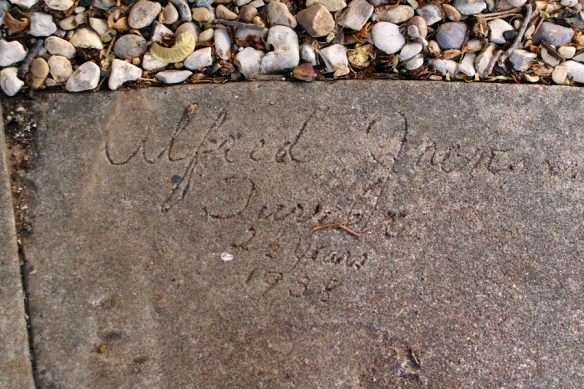
I love the home we’re in now. I think the tiny footprints that lead to our front porch – and the note that named the owner of those little feet – are fantastic. I love that my child grew up in this house. I adore my neighbors. I’m grateful we now have central heat and air. I’m thankful we replaced the original electrical wiring (wrapped in linen!) with modern wiring encased in insulation and conduit (hooray for fire retardation!). But energy efficient this house is not. I’d like to see what Mr. Certified Energy Management Engineer would say about this place.

 In the posts below this one, you can read about a few of the hoops we had to jump through to get this project approved. Wind Bracing, Environmental Impact, and Heat Loss/Heat Gain Studies are just a few examples, but there was one city issue that could’ve changed the whole look of the house. You see, they didn’t “like” the pitch of our roof – for clarification, the powers-that-be approved the completely flat roofs, they just wanted the top roof changed to a steeper pitch.


 adventures on spring lake